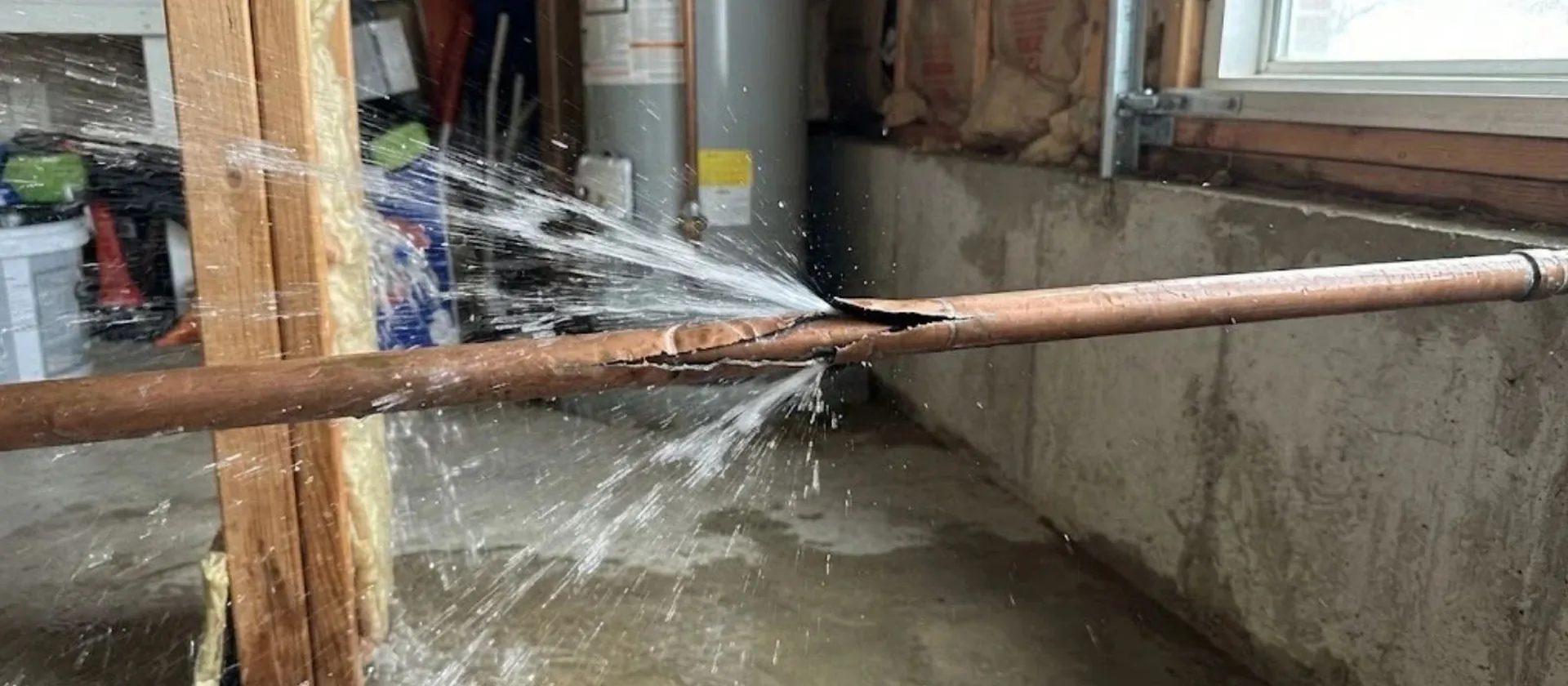
If a pipe has burst, find the main water shutoff and close it right now, then call us. Turn the valve clockwise until it stops. The main is usually at the street side of the house, in a utility box near the meter, or where the line enters the garage or basement. Every minute the water runs adds damage, and our dispatcher can talk you through the shutoff if you are not sure where it is.
Once the water is off, open a faucet at the lowest point to drain the line, switch off the water heater and keep clear of any electrical equipment that is wet. Then we take over: finding the break, stopping the loss and planning the repair.
What to do in the first ten minutes
Shut the main
Close the main valve to stop the flow. If it is stuck, tell the dispatcher, and we will talk through your options.
Drain and protect
Open the lowest faucet to release pressure, turn off the water heater, and move valuables out of the wet area.
Make it safe
Avoid wet electrical outlets and appliances. If water is near the panel, stay clear and tell us when you call.
Record the damage
Photograph the burst, the water and the damaged items before cleanup. Your insurer will want them.
Why pipes burst
Corrosion and age
Old galvanized steel rusts from the inside until the wall thins and fails. Copper pinholes from the inside in aggressive water.
Pressure spikes
High street pressure or water hammer stresses joints. A pressure regulator that has failed can put your entire system under strain.
Freezing
Saratoga mornings seldom freeze for long, but an exposed line on a cold night can crack. Foothill houses with outside hose bibs and unheated crawlspaces are most at risk.
Physical damage
Digging, a nail in a wall or a tree root against a buried line can puncture or split a pipe.
Hillside homes carry additional pressure concerns. Lines that run downhill from a high main see higher static pressure at the low end. A pressure regulator and a gauge on the hose bib tell you whether your system is running within a safe range. We test pressure on every burst pipe call because a broken pipe is often a sign the whole line is under stress.
Repair, replace or repipe
| Situation | Typical repair | What to expect |
|---|---|---|
| One failed section, rest of pipe sound | Cut out and replace the section | Quick, often finished in one visit. |
| Multiple pinholes or repeated failures | Replace the run or the whole line | Longer job, ends the repair cycle. See repiping. |
| Failed fitting or valve | Replace the fitting | Fast when parts are on the truck. |
| Underground supply line break | Excavate and repair, or reroute | Depends on depth and what covers the line. |
| Leak you cannot find | Locate before opening walls | Our leak detection page explains how. |
Do not wait on a slow weep
A small drip at a joint can be the first sign of a larger failure. If you see a damp spot at a fitting, a green crust on copper or a pinhole spray, call before it becomes a flood. Early repair usually costs far less than the repair plus water damage.
Water damage and who to call
A burst pipe leaves water in drywall, insulation and flooring. Plumbers stop the water and fix the pipe. Water damage restoration companies dry and repair the building. We can recommend next steps, but keep that distinction in mind when planning. Mold can begin growing within a couple of days in wet materials, so do not wait on drying.
Homeowners insurance typically covers sudden pipe bursts, including resulting damage, though the pipe itself may be the owner's cost. Do not clean up before you photograph. Keep the burst section if we remove it, since adjusters sometimes want to see it.
What the plumbing code says about pressure
The California Plumbing Code, which follows the Uniform Plumbing Code (UPC), calls for a pressure-reducing valve where static water pressure can exceed 80 psi. If a gauge on your hose bib reads above that, a regulator is a code item, not an upgrade. Ask us to check it on any burst pipe visit.
If you have a claim, ask your insurer whether they have a preferred process before work begins, and keep every invoice.
Pipe burst right now?
Call the 24/7 line. Close the main valve first, then tell us where the water is coming from.
Coverage and related help
We respond to burst pipes across Saratoga 95070, from the Village to the foothills, and in Los Gatos 95030 and 95032. For slow leaks you cannot see, start with leak detection. If the burst involves a water heater, see water heater repair. Our Los Gatos page covers the neighboring area.
Common Questions
Close the main water shutoff, open a low faucet to drain the line, turn off the water heater and call. If you cannot find the main, say so when you call.
Yes. The line is answered 24/7 including weekends and holidays.
Sudden bursts are commonly covered for the resulting damage. The pipe itself may not be. Photograph everything and call your insurer.
Yes. We locate the break, open the smallest possible section and make the repair. Drywall patching is a separate step.
Not always. One failed section can be repaired. If the pipe is corroding along its length, repiping may save repeated calls.
The dispatcher gives you an arrival estimate when you call. We do not promise a fixed window, but burst pipes are moved to the front of the schedule.
Most bursts in this climate come from corrosion, pressure spikes or physical damage, not freezing.
Yes. High pressure strains pipes. A gauge on the hose bib shows the number, and a regulator corrects it.