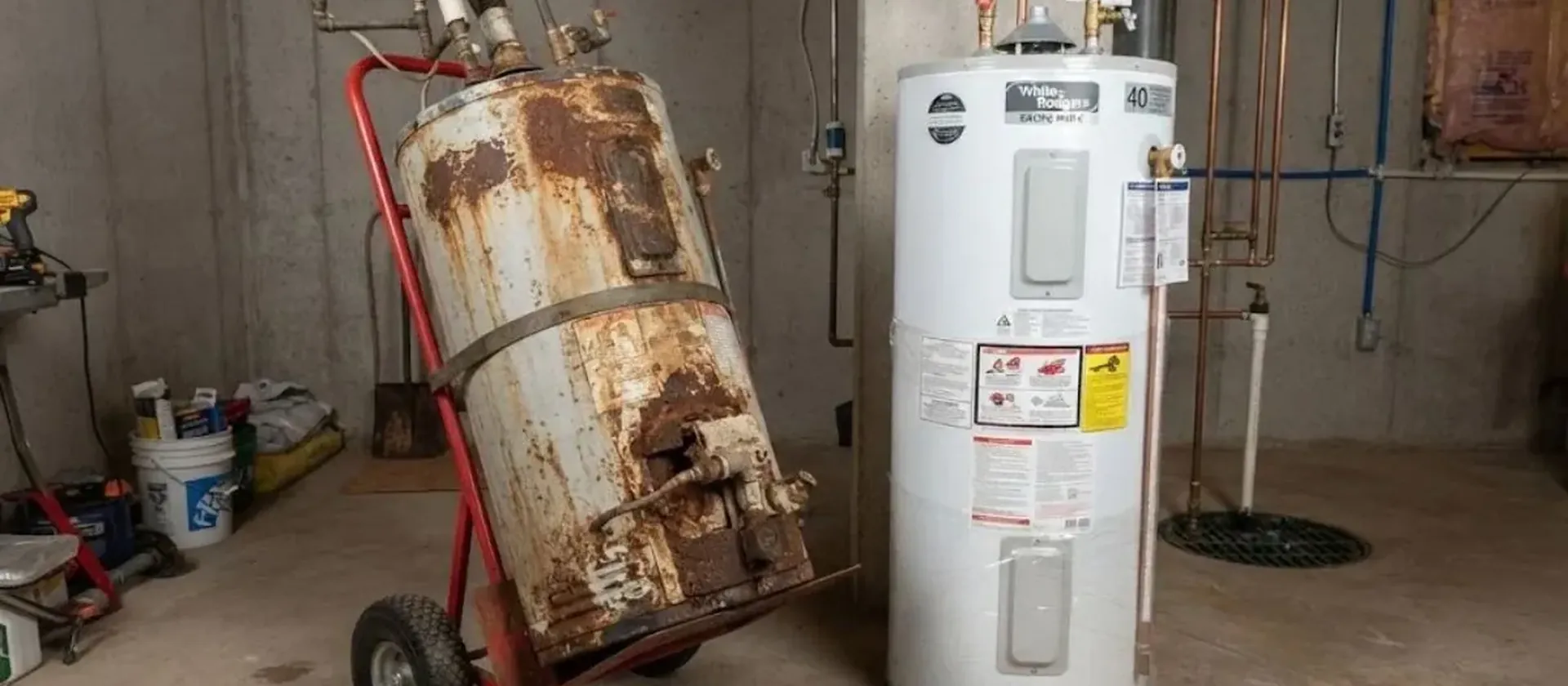
If water is pooling around your tank right now, close the cold water valve above the heater, switch the heater to off or pilot, and call. Our line is answered 24/7, and a leaking tank is one of the calls we move to the front of the schedule. A rusted shell that weeps cannot be patched, so the question becomes how fast a replacement can be in your garage or closet.
Most replacements take a few hours when the new unit matches the old one in fuel type and size. Changes like moving from a tank to a tankless unit, relocating the heater or adding a new vent take longer, and we explain that before we start.
Signs the tank is finished
Water at the base
Moisture that returns after you wipe it up, rust streaks or a stained drain pan point to a failed tank liner. Shut off the cold water and call.
Rusty or cloudy hot water
Brown water only from hot taps often means the tank is corroding inside. If cold taps run clear, the heater is the likely source.
Age past ten years
Tanks often start failing between eight and twelve years. Old units can fail without much warning, so planning a swap on your own schedule beats a flooded closet.
Repairs stacking up
A second repair in a year on an older tank usually costs more than the first month of a new unit once you count the lost hot water.
Choosing the replacement
| Type | Best fit | Trade-off |
|---|---|---|
| Standard gas tank | Homes with a gas line and a vent already in place | Lowest upfront cost, standby heat loss, needs venting. |
| Standard electric tank | Homes with no gas, or a closet with no vent path | Slower recovery, higher operating cost per gallon. |
| Tankless gas | Households that run several showers and want less floor space | Higher install cost, may need a larger gas line and new venting. See tankless water heater. |
| Heat pump or hybrid | Garages or large spaces with room to pull heat from the air | Highest efficiency, needs clearance and a condensate drain. |
If the swap involves a new fuel type, a new location or a tankless conversion, the work looks more like a new setup. Our water heater installation page covers those jobs, and our water heater repair page helps when a part, not the whole tank, has failed.
What a replacement visit includes
Shut off and drain
We close the gas or power, shut the water, and drain the old tank safely to a floor drain or the yard.
Remove and haul away
The old unit comes out and leaves with us. You do not need to arrange disposal.
Set and connect
The new heater is set on a pan or stand, connected to water, gas or power, and fitted with a new expansion connection and shutoff if the old ones are worn.
Brace and test
The tank is strapped to meet California seismic rules, the vent and gas joints are tested, and the temperature is set before we leave.
Earthquake bracing is part of every swap
California Health and Safety Code section 19211 requires water heaters to be braced, anchored or strapped to resist falling or horizontal displacement. Saratoga sits close to the San Andreas fault in the Santa Cruz Mountains, so strapping is not a formality here. We install it on every replacement and check it on repair visits.
Permits, venting and local rules
Replacing a water heater in kind generally needs a permit in California cities. Ask the City of Saratoga building division what applies to your address, since requirements for gas vents, drain lines and expansion tanks can change with the project. We pull permits where they are required and schedule any inspection.
Hard water matters too. San Jose Water Company serves most of Saratoga, and its groundwater source is roughly three times harder than Valley Water imported supply. A new tank on a groundwater-fed street benefits from a yearly flush, which keeps sediment from baking onto the bottom of the tank.
If a tank bursts suddenly, homeowners insurance may cover the water damage but not the heater itself. A slow leak from rust is often treated as wear. Photograph the damage before cleanup and read your policy.
Tank leaking now?
Call the 24/7 line. We can often have a replacement unit in your home the same day.
Where we replace water heaters
We cover Saratoga 95070, from older homes near the Village to hillside houses along Pierce Road and Quito Road, and homes through the Golden Triangle. Next door in Los Gatos (95030, 95032) and Monte Sereno, we do the same work, as described on our Los Gatos plumbing page. If a leak has gone on a while, leak detection can find where the water went.
Common Questions
Yes. The line is answered 24/7. Whether we install that night or the next morning depends on the unit you need and what is in stock, and the dispatcher will tell you honestly.
A like-for-like tank swap usually takes a few hours. Moving to tankless, changing fuel type or relocating the unit takes longer because of venting, gas and water line changes.
In most California cities a permit is required, even for a like-for-like swap. Ask the City of Saratoga building division about your address. We handle permits where they are required.
Yes. Removal and disposal of the old unit is part of the visit, so you do not have to find a way to move a heavy tank.
California Health and Safety Code section 19211 requires bracing, anchoring or strapping. We install straps on every replacement.
Tankless saves floor space and avoids standby heat loss, but it costs more to install and may need gas line and venting upgrades. We lay out both costs so you can compare.
Tank models often last eight to twelve years. Hard water, sediment and a worn anode rod can shorten that, so a yearly flush and an anode check help.
A sudden rupture may be covered for the water damage but not the heater. A slow leak from corrosion is often excluded. Photograph everything and call your insurer before cleanup.