Water that leaves a pipe does not always show itself. It soaks into a slab, runs inside a wall cavity or seeps into soil, and by the time a stain appears the damage has been growing for weeks. If you can hear water running when everything is off, or you see water coming through a ceiling, shut the main valve and call our 24/7 line.
Leak detection is the work of finding the exact spot before any wall is opened. That saves money on drywall and flooring, and it tells your insurer where the loss started. Below is how we narrow it down, what clues to look for, and what to do while you wait.
Clues that water is escaping somewhere
The meter moves with everything off
Turn off every fixture and appliance, then watch the small dial or flow indicator on the water meter. Movement means water is leaving the system somewhere.
A bill that jumped without a reason
A bill that climbs for a month or two with the same household usually means a leak, often a running toilet or an underground line.
Warm spots, damp carpet or hissing sounds
Warm patches on a floor can come from a hot water line leaking under a slab. A hiss in a wall points to pressurized supply pipe.
Musty smell, peeling paint or new stains
Moisture in a wall or ceiling shows up as discoloration and bubbling paint. Mold needs damp materials to grow, so a smell that lingers is a warning.
Do this right away
Fast action limits the damage and gives us a clean starting point.
- Close the main water shutoff, usually near the street side of the house or by the meter, and see if the problem slows.
- Turn off power to wet areas only if you can do so safely. Never touch electrical equipment while standing in water.
- Photograph stains and damage for your insurer, and note the date you first saw them.
- Check the meter before and after the shutoff. A moving meter with the main closed means the leak is on the street side of the valve.
How we find a leak without opening the wall
| Method | What it finds | Best for |
|---|---|---|
| Pressure test | Whether a line holds pressure or drops | Confirming a leak and deciding which line to trace. |
| Acoustic listening | The sound of water escaping a pressurized pipe | Slab leaks and buried supply lines. |
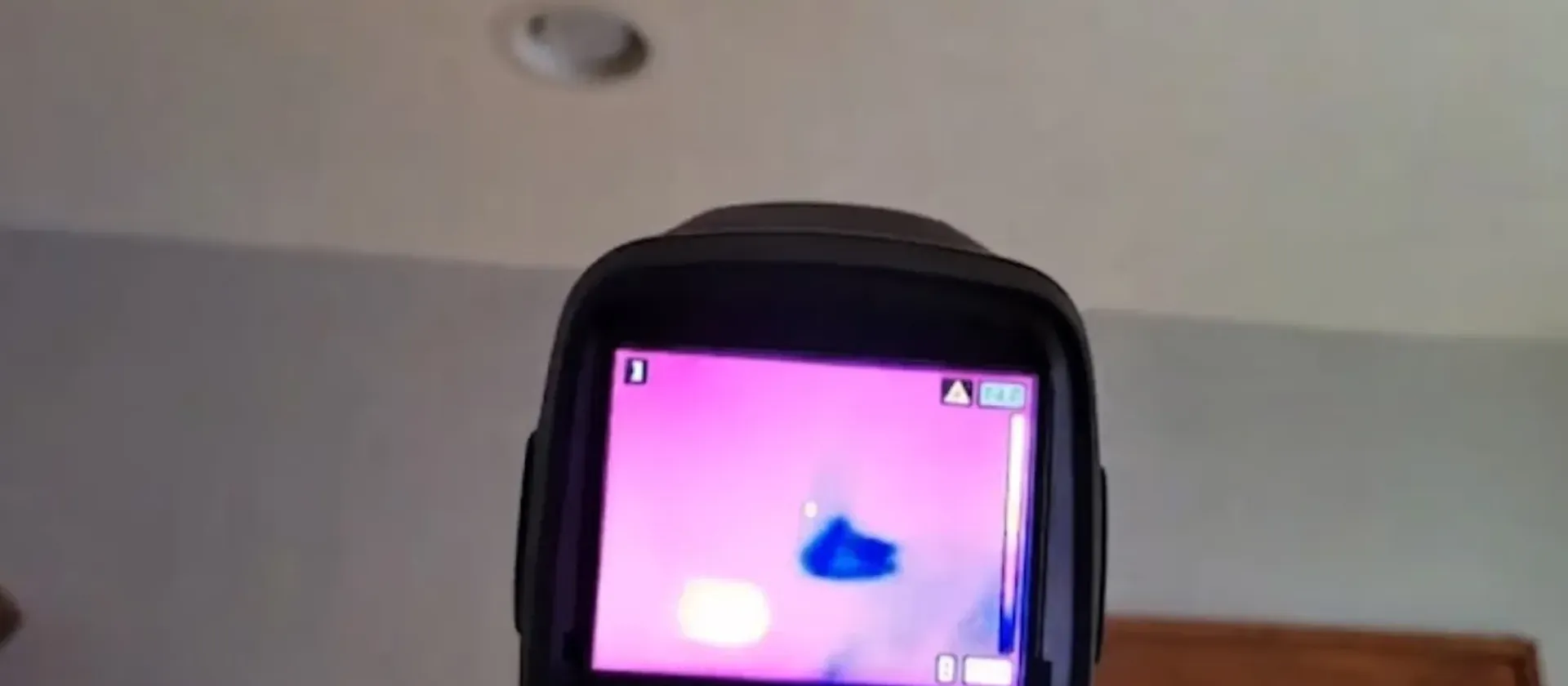
| Thermal imaging | Temperature differences from wet materials or hot lines | Wall leaks, ceiling leaks and radiant heating issues. |
| Moisture meters | Hidden moisture in drywall, subfloor and wood | Mapping the wet area after a leak is found. |
| Camera inspection | Cracks, joints and breaks inside drain lines | Leaks in sewer and drain pipes. See sewer camera inspection. |
Most leaks are located with a combination of these. A pressure test tells us which system has the problem. Listening and thermal imaging narrow the search. Moisture readings map the damage. Then we open the smallest possible section and fix the pipe.
Where the water ends up in Saratoga homes
Many Saratoga houses were built in the postwar decades on slab foundations, and a good number have copper supply lines running through or under the concrete. Copper pinholes from the inside, especially where water is hard or aggressive. That is how a slab leak can run for months before the first warm spot appears. If you suspect water under the floor, see our slab leak repair page.
Hillside lots add another wrinkle. A leak in a line that runs across a slope can surface far from where it started, since water follows soil and gravel downhill. The lawn that stays wet near the street may have a break near the house. San Jose Water Company supplies most Saratoga homes, and its groundwater source reads roughly three times harder than Valley Water imported supply. Harder water leaves scale, and scale is part of why older metal lines fail.
Repair options after we find it
Spot repair
- Cut out the damaged section and replace it.
- Smallest opening in the wall or slab.
- Good when the rest of the pipe is sound.
- Usually finished in a single visit.
Reroute or repipe
- Run new pipe around a slab or wall.
- Better when the same line leaks repeatedly.
- See repiping for whole-house options.
- Takes longer but ends the repair cycle.
Start with the meter, then call
San Jose Water Company, which supplies most Saratoga homes, offers its customers guidance for finding leaks with the water meter. The test matches the first check we run on any call: shut off every fixture, then watch the dial or flow indicator. Separately, the California Plumbing Code (UPC-based) requires new water piping to be tested and proved tight before it is covered, so a leak in new work is a failed test, not an accepted risk.
Many homeowners policies cover sudden water damage but not the pipe itself, and slow leaks are often excluded. Some insurers require a written leak report, which we can provide. Contact your insurer before repairs begin.
Water where it should not be?
Call the 24/7 line. Close the main valve first, then tell us what you can see or hear.
Nearby services and areas
If the leak turns out to be a burst line, burst pipe repair covers the emergency response. For leaking fixtures like toilets and faucets, see toilet repair and faucet repair. We locate leaks across Saratoga 95070 and in Los Gatos 95030 and 95032, detailed on our Los Gatos plumbing page.
Common Questions
The line is answered 24/7. After-hours visits focus on stopping water and finding the source. Larger repairs are scheduled once the leak is controlled.
Check your water meter with all water off. If it moves, water is leaving the system. A bill that jumps without a change in use is another strong sign.
We try to keep openings small. Acoustic and thermal tools narrow the leak to a few inches before anything is cut.
Yes, with a camera. Water supply leaks and drain leaks need different tools, so we ask about symptoms before choosing.
Sudden damage is often covered, but slow leaks and the pipe itself may not be. Photograph the damage and call your insurer before repairs begin.
Many visits take one to three hours. Slab leaks and long buried lines take longer.
Yes, if you see active leaking or hear water running with everything off. Close the main, then call.
Mold needs moisture and a few days to grow. A leak left in a wall or under a floor can create the conditions. Fast drying and repair help prevent it.