Why homeowners schedule a sewer camera inspection
A sewer lateral is buried, so problems stay hidden until water backs up. A camera inspection turns an unknown into a recording. It tells you whether the pipe is sound, whether roots have found it and whether a stretch has sagged or cracked.
Most people call us for one of three reasons. They are buying or selling a home, they have had a backup and want to know why, or they are planning work like a remodel, a new driveway or a large tree removal near the line.
Locate the cleanout
We open the cleanout, usually a capped pipe near the foundation or at the property line. If there is none, we access the line through a toilet or a roof vent.
Run the camera
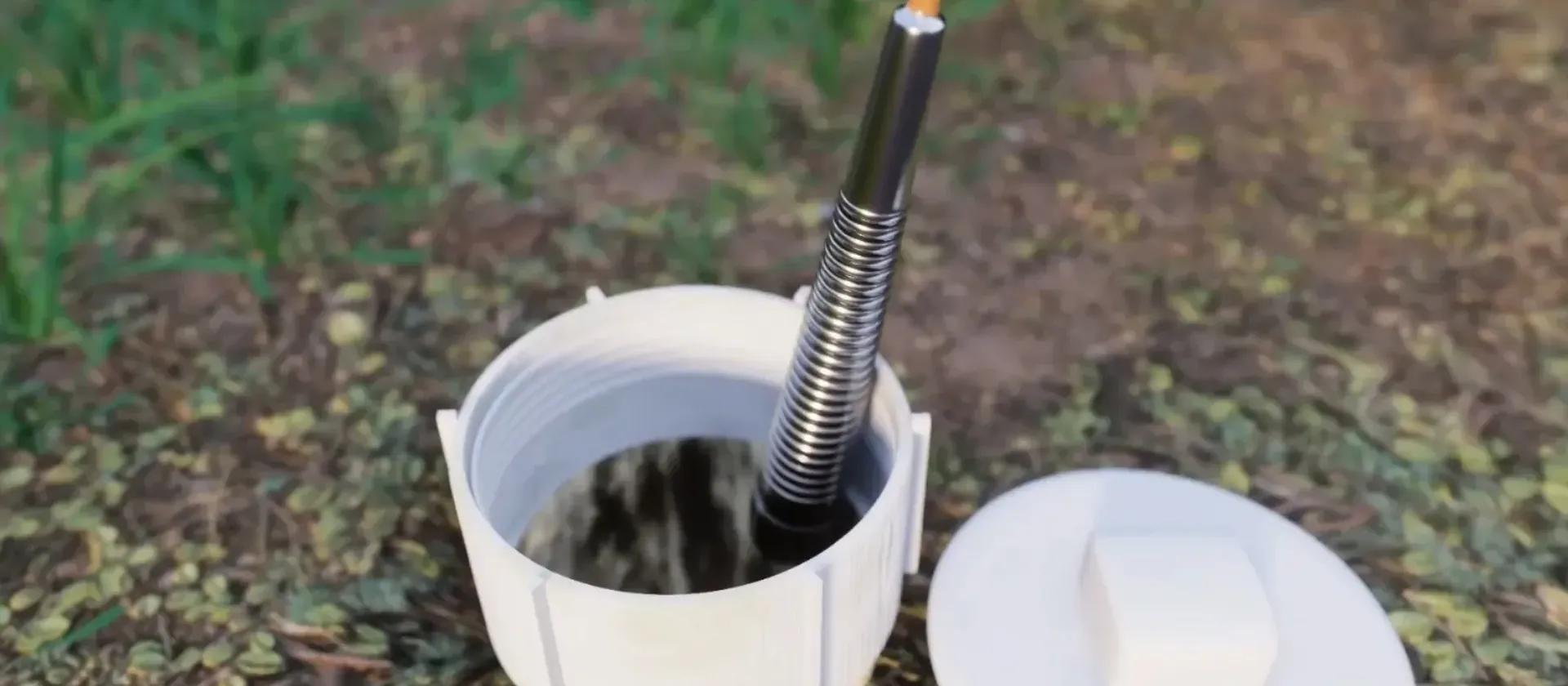
A flexible rod carries a waterproof camera down the lateral. We record the whole run and note the distance at each defect.
Locate the problem
A transmitter in the camera head lets us mark the ground above any defect, so repairs are planned in the right spot.
Review the video
We walk you through what we saw, what is minor and what needs action, and give you a copy of the footage.
What the camera can reveal
| What the camera shows | What it usually means | Typical next step |
|---|---|---|
| Roots entering at joints | Open joints in clay or older pipe | Cutting or jetting, then lining if the pipe is otherwise sound. |
| A low spot holding water (belly) | Soil settled under the pipe | Monitor if minor, repair or replace if it holds debris. |
| Cracked or broken pipe | Age, soil movement or load damage | Spot repair or lining. See sewer line repair. |
| Grease or scale on the walls | Buildup narrowing the pipe | Hydro jetting to scour the walls. |
| Offset joints | Ground movement | Evaluate depth and extent before choosing a repair. |
| Clean, smooth pipe | No action needed | Document the condition and re-check on a schedule. |
Inspecting a home before you buy
A standard home inspection does not usually include the sewer lateral, which is why many buyers add a camera run. A cracked clay lateral or a collapsed section found after closing becomes your repair. Found before closing, it becomes a negotiation point.
Ask the seller or agent for access to the cleanout. If there is none, tell us when you book and we plan another entry point. Send your footage to your agent and attorney, and use it to understand what a repair might involve before you commit.
Saratoga lots and older laterals
Saratoga mixes older hillside homes with newer tract and custom construction. Older laterals may be clay, cast iron or Orangeburg, a tar-paper pipe that tends to deform. Newer homes more often have plastic. The camera, not the age of the house alone, tells you what is actually in the ground.
Inspection versus cleaning
A camera inspection looks. It does not clear a blockage. If the line is fully blocked, we usually clear it first so the camera can travel through, which is a separate service covered on our sewer line cleaning page. If water is already backing up, call the emergency line and mention it so we bring the right equipment.
Sewer service in Saratoga is split between agencies. According to the Santa Clara County LAFCO service review, West Valley Sanitation District serves part of the city. If the camera shows a defect near the public connection, we help you understand where your responsibility ends and the district begins.
Insurance rarely pays for an inspection by itself. If a backup has already damaged your home, send your insurer the footage as part of the claim.
Want to see inside your sewer line?
Call to schedule a camera inspection. If water is backing up, tell the dispatcher so we treat it as urgent.
Where we inspect
We inspect laterals across Saratoga 95070 and nearby towns, including Los Gatos (95030, 95032), Monte Sereno and Campbell. Buyers in Los Gatos can read the details on our Los Gatos plumbing page. For a repair after the inspection, see sewer line repair.
Common Questions
It is a good idea, especially with an older house. Standard home inspections do not normally include the lateral. A camera run can reveal cracks, roots and sags before you close.
Most runs take one to two hours, depending on access, lateral length and whether the line needs pre-cleaning.
Yes. We review the footage with you, explain what we saw and give you a copy you can share with your agent, attorney or insurer.
We can access the line through a toilet or a roof vent. If you are buying, tell us when you book so we plan the entry point.
A locator in the camera head can mark the spot and show depth from the surface. This helps plan a repair.
No. It shows the condition of the pipe. If the line needs clearing or repair, we explain the options and quote them separately.
Planned inspections are scheduled during the day. If sewage is backing up, our 24/7 line sends a crew who can clear the line and run a camera.
There is no fixed rule. Older homes or homes with large trees nearby benefit from a check every few years. A new owner should schedule one soon after moving in.