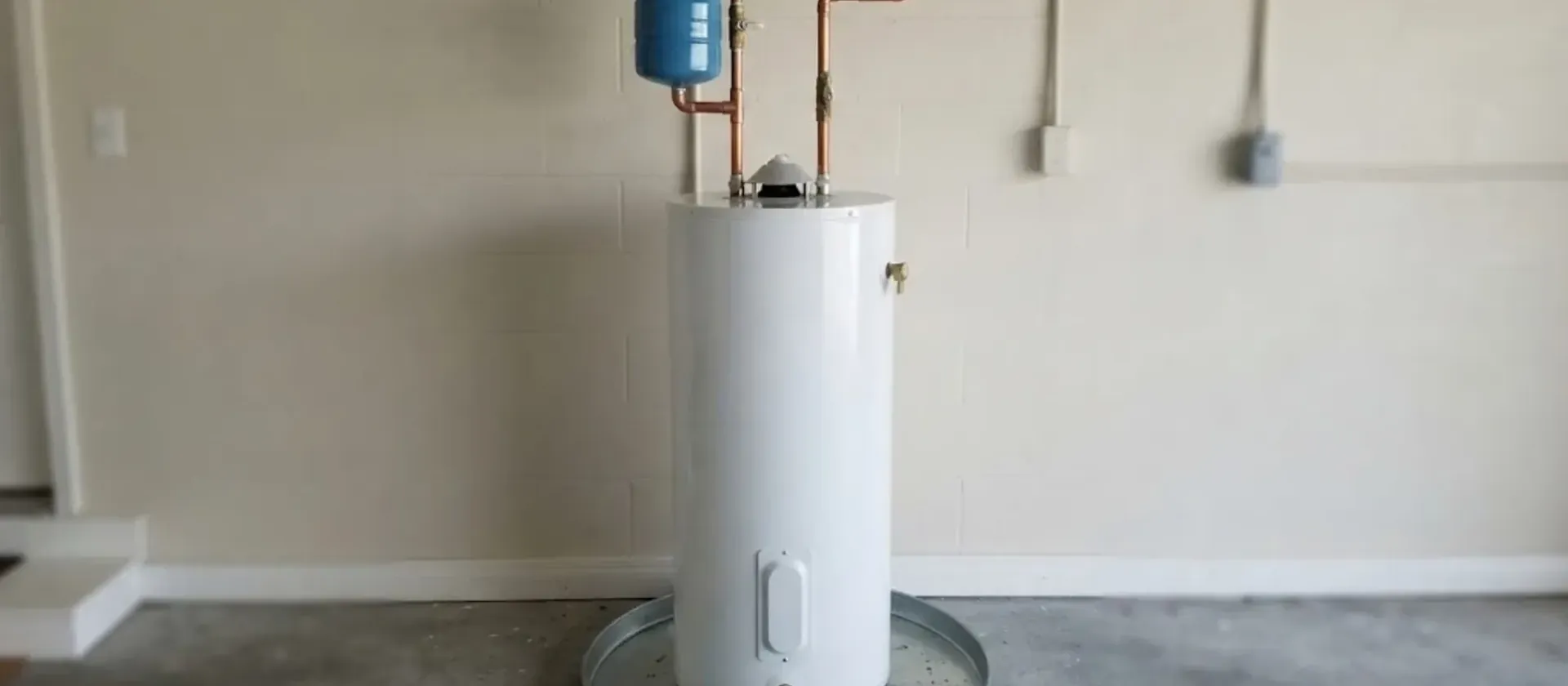
Planning a water heater installation in Saratoga
A new installation differs from a swap because something changes. You may be adding a heater to an addition, moving it out of a closet, switching from electric to gas or choosing tankless for the first time. Each of those touches venting, gas, water and sometimes electrical work, so the plan matters more than the unit.
We start with how your household uses hot water. A family of five with two showers running at breakfast needs different capacity than a couple in a hillside cottage. From there we look at where the heater will live, what it will vent through and whether your gas line and panel can support it.
Which type fits your home
| Type | Typical household | What to plan for |
|---|---|---|
| Standard tank, gas or electric | Most single-family homes | Floor space, venting for gas, seismic strapping. |
| Tankless gas | Busy households that want endless hot water | Gas line capacity, new venting, a condensate line for condensing models. |
| Tankless electric | Small spaces and point-of-use needs | Heavy electrical load, often a panel upgrade. |
| Heat pump (hybrid) | Garages with open floor space and good airflow | Clearance on all sides, condensate drain, noise near bedrooms. |
Tankless units are covered in more detail on our tankless water heater page. If your current heater has already failed and you only need a swap, see water heater replacement.
Sizing, venting and gas
Tank size is chosen by the number of people and fixtures. Tankless sizing uses flow rate in gallons per minute and the temperature rise from your incoming water. Undersized units run out of hot water. Oversized ones waste money and, for gas models, may need bigger venting than your home has.
Gas appliances need a safe path for exhaust and a gas line that can deliver enough BTUs. A tankless unit may draw more gas than the tank it replaces, which can mean a bigger pipe from the meter. PG&E owns the line up to the meter, and we handle the piping on your side. If you ever smell gas during or after any project, leave the house and call 911 and PG&E at 1-800-743-5000.
Why homeowners pick a tank
- Lower equipment and installation cost.
- Simple to service and repair.
- Works with existing vents in most homes.
Why homeowners pick tankless or heat pump
- Less standby heat loss and more floor space.
- Longer service life for tankless units.
- Heat pumps cut energy use sharply in the right space.
Seismic bracing and code
California Health and Safety Code section 19211 requires water heaters to be braced, anchored or strapped to resist falling or horizontal movement. Saratoga lies in the Santa Cruz Mountains foothills near the San Andreas fault, so a strapped tank is one less thing to worry about after a shake.
A new installation usually needs a permit. The City of Saratoga building division is the place to ask about your address, and we can pull the permit and schedule the inspection for you. Expansion tanks, pressure relief valves and drain lines are added or corrected as part of the work.
Walk the site
We look at the current location, venting, gas line and electrical panel, and ask how the household uses hot water.
Choose and quote
You get a clear price for the recommended unit and any alternatives before work starts.
Install and connect
We set the unit, run water, gas or power, install the vent and add the required safety devices.
Inspect and explain
We test the unit, brace it, set the temperature and show you the shutoffs and what to check each year.
Water quality and long-term care
San Jose Water Company supplies most Saratoga homes, and the groundwater it uses is roughly three times harder than Valley Water imported supply. Hardness leaves scale on heating elements and tankless heat exchangers. A yearly flush for tanks and a descaling service for tankless units keep both running closer to their rated life.
If scale is a problem in your home, ask about a water softener. Softening can protect the heater and the fixtures downstream.
New installation costs are rarely covered by homeowners insurance, since they are improvements rather than damage repairs. Ask your utility about rebates for heat pump models before you buy.
Planning a new water heater?
Call and tell us the type, the location and how many people use hot water.
Areas we install in
We install across Saratoga 95070, including the Village, the hillside streets off Pierce Road and the Golden Triangle. We also install in Los Gatos (95030, 95032), Monte Sereno and Campbell. If your current heater is leaking, call our emergency line first and read water heater repair for what to do while you wait.
Common Questions
Tank sizing depends on household size and peak use. A common range is 40 to 50 gallons for a small household and 75 gallons for a large one. Tankless sizing uses flow rate and temperature rise.
Yes, but it often requires a bigger gas line, new venting and sometimes a new condensate drain. We check each before we quote the work.
Usually yes. The City of Saratoga building division can tell you what applies to your address. We pull permits where they are required.
Yes. They work best in a garage or large space with room for airflow. We check clearance, condensate drainage and noise before we recommend one.
Yes. California Health and Safety Code section 19211 requires bracing, anchoring or strapping, and we install them on every unit.
Yes. We size the unit for the added fixtures, plan the venting and route the water and gas lines. Bring the plans if you have them.
If your tank has failed and you need a replacement, our 24/7 line is the one to call. Planned installations are scheduled during the day.
A yearly flush is a good habit, especially with hard water. Tankless units benefit from a descaling visit every year or two, and all units should have the straps and relief valve checked.