A toilet swap is one of the plumbing jobs a handy homeowner can do in an afternoon, provided the pieces underneath are in good shape. The toilet is the visible part. The flange, the wax seal and the floor are what decide whether it leaks in a month.
This guide covers a standard floor-mounted toilet connected to a drain in the floor. If the toilet is on a second floor, or you see soft flooring, rust or a cracked flange, stop and read the last section before you start.
Before you buy: measure the rough-in
The rough-in is the distance from the finished wall to the center of the drain hole in the floor. The most common size is twelve inches, but ten and fourteen exist. Measure to the center of the closet bolts, not to the toilet's base.
A twelve-inch toilet will not fit a ten-inch rough-in without being pushed against the wall. Check the box for the rough-in size before you take it home. Also measure the clearance in front of the toilet and to each side. Building code sets minimums, and the Town or City building division can tell you what applies.
| Check | Why it matters |
|---|---|
| Rough-in distance | The toilet must sit square to the wall. |
| Flange height and condition | A cracked or low flange causes leaks. |
| Floor condition | Soft flooring means a leak happened before. |
| Shutoff valve | An old valve may not close or may break. |
| Supply line length | Old lines are often too short or too stiff. |
Remove the old toilet
Shut off and drain
Close the shutoff valve, flush and hold the handle, then sponge the last water from the tank and bowl.
Disconnect
Remove the supply line, then unscrew the nuts on the closet bolts at the base.
Lift and set aside
Rock the toilet gently to break the seal and lift it straight up onto a towel. It is heavy, so ask for help.
Plug the drain
Stuff a rag in the drain opening to block sewer gas and keep tools out, then scrape off the old wax.
Check the flange
The flange is the ring that the toilet bolts to. It should sit on top of the finished floor, or very close, and be firmly screwed down. A flange that sits below the floor surface needs a spacer ring, or the wax seal will not close.
Cracked cast iron flanges are common in older homes. Repair rings exist for many cases, but a rotted subfloor needs a carpenter before any toilet goes back on. If you see dark, soft wood, call us. Water has been escaping for a while. Our leak detection page explains how we check for related damage.
Set the new toilet
Place a new wax ring on the flange or the toilet horn, according to the product instructions. Lower the toilet straight down so the horn seats in the wax, without twisting. Press down firmly, then thread the washers and nuts onto the closet bolts.
Tighten the nuts a little at a time, alternating sides, and stop when the toilet no longer rocks. Overtightening cracks the porcelain. Cut the bolts to length and snap on the caps. Connect a new supply line, open the valve slowly and check for leaks.
Replace the supply line and the shutoff valve
The braided supply line costs little and fails without warning, so replace it with every new toilet. Choose one long enough to reach without a tight bend. If the old shutoff valve weeps at the stem or will not close fully, replace it as well. Shut the main water valve first, since a new valve means cutting into the supply pipe.
A multi-turn valve that has never been exercised can crack when you first try it. If you feel resistance, stop. A stuck valve is a sign to call a plumber and shut the main instead.
Test it before you walk away
Flush three or four times and watch the base and the supply connection. Dry them with a paper towel and check again after ten minutes. Place a sheet of dry toilet paper under the tank bolts overnight. Any wet spot shows a slow leak that you can fix with a quarter turn.
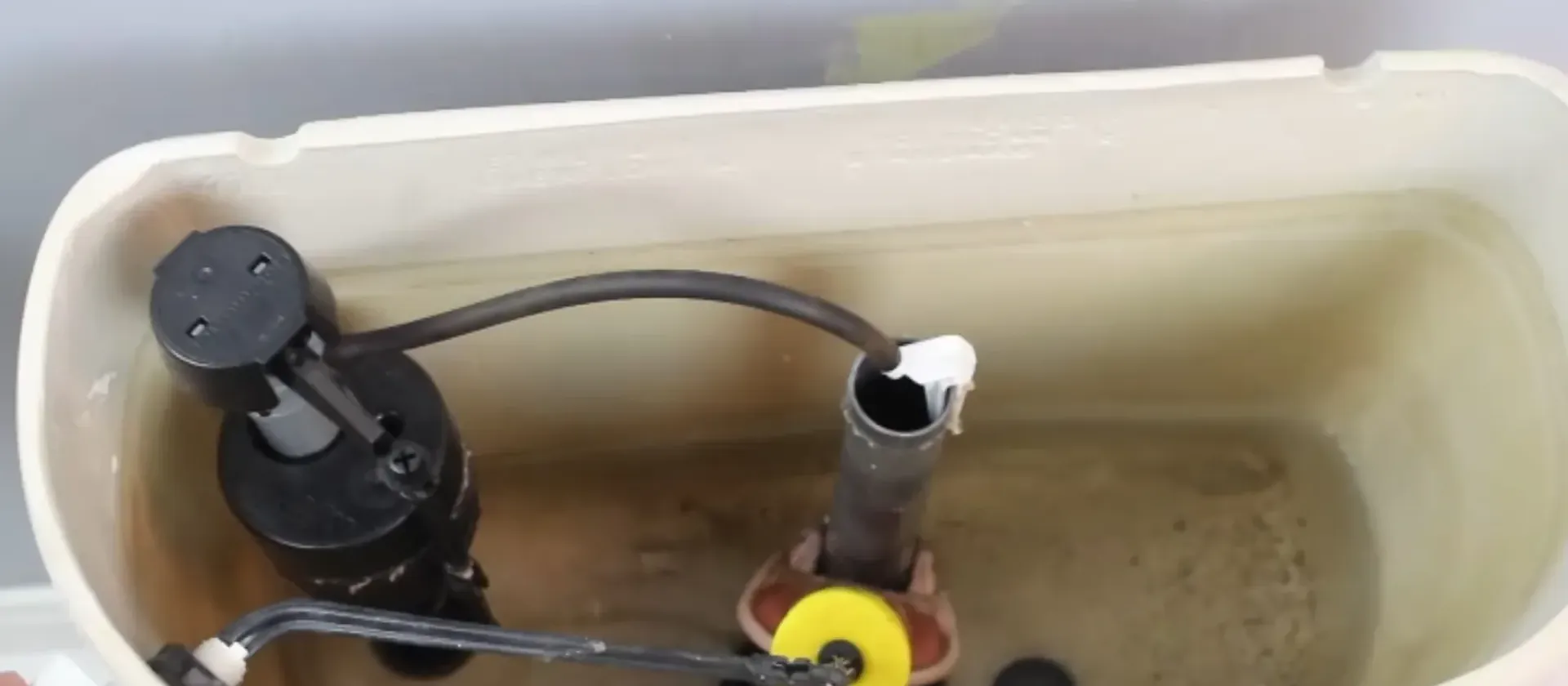
Last, check the tank water level and the flapper. A toilet that runs after you flush has a fill valve or flapper problem, which is a cheap fix. If it keeps running, our toilet repair page lists the usual causes.
Why a toilet install in Saratoga can differ
San Jose Water Company serves most Saratoga homes, and its groundwater reads roughly three times harder than Valley Water imported surface supply. Hard water leaves scale in old shutoff valves, so a valve that has not moved in years may stick or break when you close it. Replace it with the toilet rather than hoping.
Older homes near the Village along Big Basin Way may still have cast iron drains and original flanges. Inspect before you set a new toilet on one. California limits flush volume for new fixtures, so a replacement uses less water per flush than a pre-1990s toilet.
Sources: San Jose Water Company annual water quality report. Toilet flush limits come from California plumbing and water efficiency standards.When to call a plumber instead
Call when the flange is cracked, the floor is soft, the shutoff will not close or the toilet is on an upper floor where a leak damages the ceiling below. Also call if the toilet will not stop running or the bowl keeps clogging after a new install. The drain may be partly blocked, which is a drain cleaning job.
Our toilet repair and installation service covers resets, flange repairs and replacements. If the work involves a permit, ask the City of Saratoga building division or the Town of Los Gatos about your address. Los Gatos readers can see our Los Gatos page for coverage.
Plumbing problem right now?
Call the 24/7 line and a dispatcher will plan the next step with you.
Questions Saratoga Homeowners Ask
A straightforward swap takes one to two hours, longer if the flange needs repair.
Like-for-like fixture swaps often do not. Moving a toilet or changing the drain does. Ask the City of Saratoga building division about your address.
Yes. A used wax ring will not reseal reliably once it has been compressed.
The floor may be uneven or the flange too low. Shims can help on a level flange. A low flange needs a spacer.
Scale builds in fill valves and rim jets. Replacing parts or cleaning the jets restores flow.