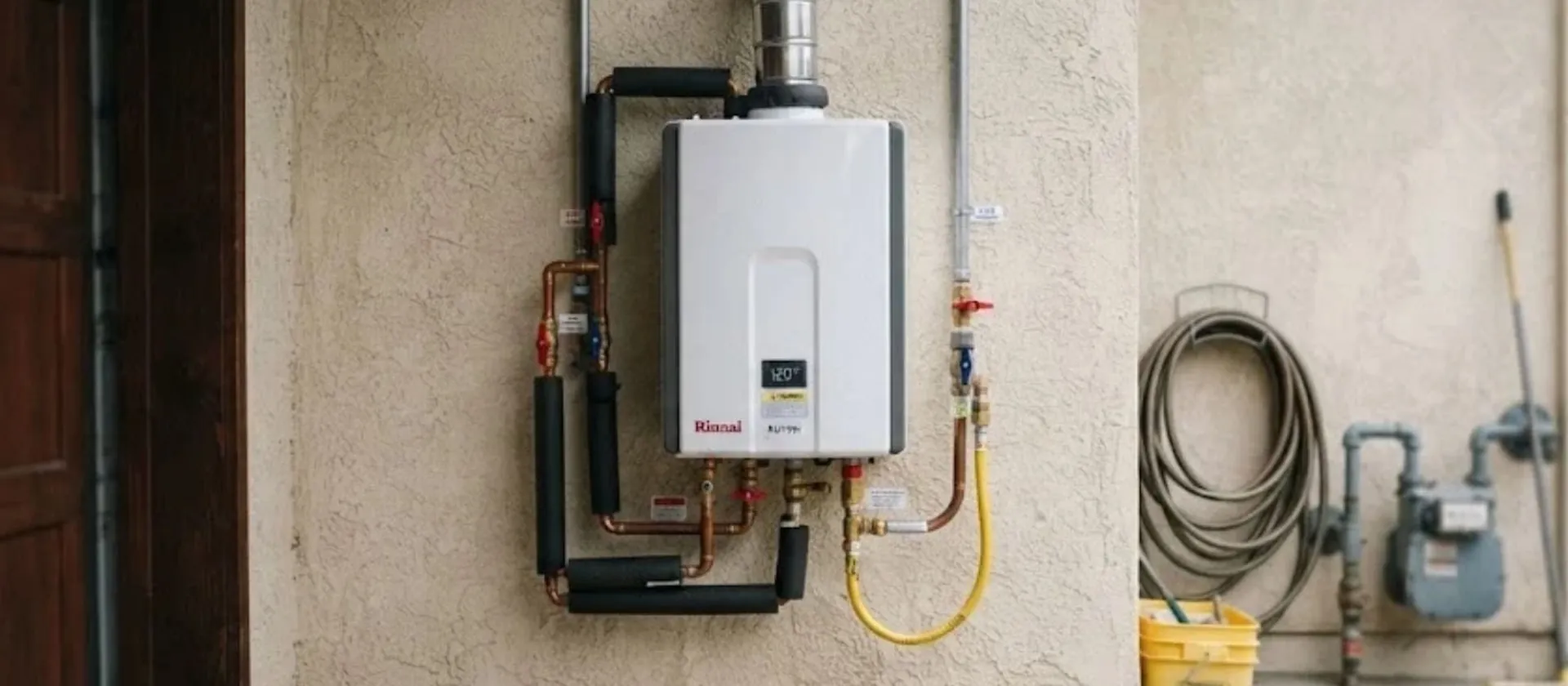
Installing a tankless water heater is not like swapping a faucet. The heater hangs on a wall in an afternoon, but each connection behind it involves a safety rule. Gas lines can leak. Vents can pull exhaust into the house. A mistake in either is not a nuisance. It is a hazard.
This guide rates each part of the job by difficulty and says plainly which parts we recommend leaving to a licensed plumber. It does not give DIY gas instructions, because those do not belong in a web article.
| Task | Difficulty | Who should do it |
|---|---|---|
| Mounting the unit on the wall | Moderate | Skilled homeowner or plumber. |
| Connecting water lines and isolation valves | Moderate | Skilled homeowner or plumber. |
| Sizing the gas line and connecting gas | High | Licensed plumber. |
| Venting and condensate drain | High | Licensed plumber. |
| Electrical connection | Moderate to high | Licensed electrician or plumber. |
| Permit and inspection | Required | Licensed contractor files. |
Why gas is the hard part
Gas appliances need the right pipe size, correct fittings, a sediment trap, a shutoff and a leak test. A tankless unit draws more gas than most tanks, so the old line may be undersized. Using the wrong fitting, or no leak test, is how gas leaks begin.
If you ever smell gas, leave the building and call 911 and PG&E at 1-800-743-5000. A gas leak is not a problem to troubleshoot. PG&E owns the meter and the service line, and the piping from the meter to the heater is the owner's responsibility.
Why venting is the other hard part
Exhaust from a gas heater carries carbon monoxide. The vent must be the right material, the right slope and the right length for the model, and it must terminate at a safe distance from windows and air intakes. Condensing models produce acidic condensate that needs a neutralizer and a drain.
Manufacturers publish vent length limits. Exceeding them causes error codes and unsafe operation. This is why the vent route is planned before the unit is ordered.
Code and the manual both apply
A tankless installation must follow the manufacturer's instructions and the California Plumbing Code (UPC-based), and gas units are certified to appliance standards such as ANSI Z21.10.3. The inspector checks the work against both. A DIY install that ignores either one can fail inspection and void the warranty.
What Saratoga adds to the job
A water heater installation generally needs a permit in California cities. The City of Saratoga building division handles permits inside the city, and the Town of Los Gatos does the same for Los Gatos addresses. A permit leads to an inspection of the gas, vent and electrical work, which is the safety check.
San Jose Water Company serves most Saratoga homes, and its groundwater reads roughly three times harder than Valley Water imported surface supply. Practical meaning: a tankless installation should include isolation valves so the unit can be flushed, since scale is the leading service issue.
California Health and Safety Code section 19211 requires water heaters to be braced, anchored or strapped. A plumber checks how the code and the manufacturer expect a wall-mounted unit to be supported.
Sources: California Health and Safety Code section 19211. PG&E gas safety guidance. City of Saratoga and Town of Los Gatos building divisions.A realistic look at the time and tools
A professional install takes most of a day because every step has a test. The gas line gets a leak test, the vent gets a seal check and the unit gets a combustion check. A homeowner without the instruments for those steps cannot verify the job is safe. That is the real argument against DIY, more than the cost.
You will need pipe wrenches, a gas-rated sealant, a manometer, a combustion analyzer, a drill, a level, venting tools and a way to neutralize condensate. Renting or buying that gear costs more than a few hours of a plumber's time.
If you still want to do part of it yourself
Some homeowners split the job. They hire a plumber for the gas, vent and permit, and handle the demolition of the old tank, the wall prep and the paint. That keeps the safety-critical parts with a licensed contractor and saves a little on labor.
Ask the plumber up front which tasks they are comfortable sharing. Clear the area around the old heater, mark where the new unit will hang and make sure the electrical outlet is within reach. Good prep shortens the visit and lowers the bill.
Warranty and insurance
Many manufacturers require installation by a licensed contractor for the warranty to apply. A DIY install may void it. Homeowners insurance may also deny a claim if a gas or fire loss traces to unpermitted work. Check both before deciding.
California requires a licensed contractor for plumbing work above the small-job limit, and you can verify any license on the CSLB website. Ask for it before work starts.
What a professional install looks like
Site visit
The plumber checks the gas meter, the line size, the vent route and the electrical supply.
Quote and permit
You get a clear price before work starts, and the permit is filed.
Install
The unit is mounted, vented, connected and tested, with a service valve kit.
Inspect and explain
The inspector signs off, and the plumber shows you the display and the flush routine.
Our tankless water heater page and water heater installation page describe the work in detail, and water heater replacement covers a failed tank. If your tank is leaking today, call the 24/7 line. Los Gatos homeowners can read the Los Gatos page.
Plumbing problem right now?
Call the 24/7 line and a dispatcher will plan the next step with you.
Questions Saratoga Homeowners Ask
Mounting and water connections are possible for skilled DIYers. Gas, venting and permits should go to a licensed plumber.
Many manufacturers require installation by a licensed contractor. Check yours.
Generally yes. Ask the City of Saratoga building division about your address.
Many take most of a day. Gas and vent changes add time.
Gas leaks and improper venting. Both are safety issues, not just comfort issues.