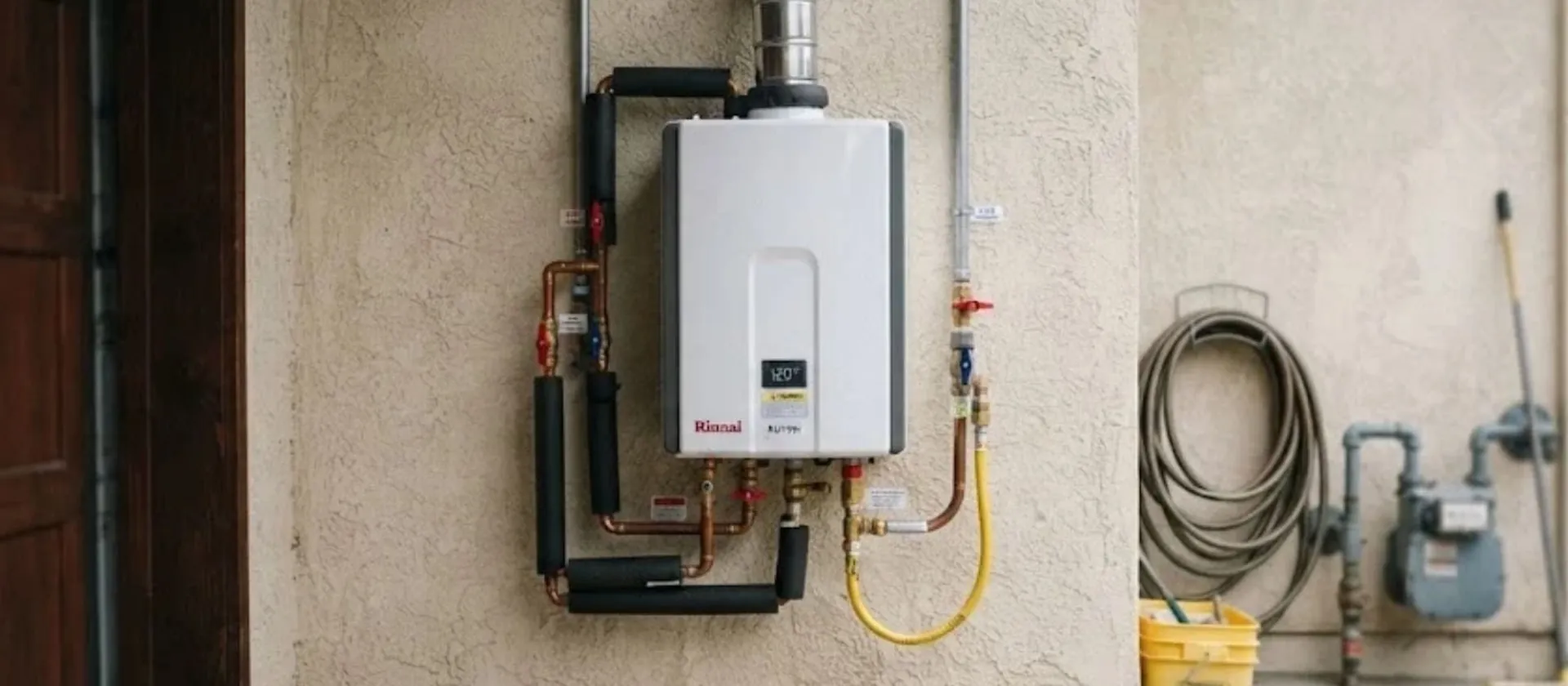
A tankless water heater installation in Saratoga takes most of a day, and the unit itself is the easy part. The work that decides whether you get steady hot water is the gas line, the vent run and the sizing. If those three are right, the heater does its job for years. If one is wrong, you get lukewarm showers and error codes.
This guide walks through the sequence from first measurement to final inspection. It assumes a gas tankless unit, which is the most common type in homes with a gas meter. Electric units follow the same plan with a heavy electrical circuit in place of the gas line.
Step one: size the heater to your hot water use
Tankless heaters are rated in gallons per minute at a given temperature rise. The temperature rise is the difference between the incoming water and the temperature you want. Colder incoming water means a bigger rise and lower flow from the same unit.
Add up the fixtures that might run at once. A shower, a dishwasher and a running kitchen tap are a realistic peak for many households. Match that peak to the heater's rated flow at your rise, with some margin. An undersized unit shuts down or delivers lukewarm water when two fixtures run.
| Fixture running together | Typical flow |
|---|---|
| Shower | About 2 gallons per minute. |
| Kitchen sink | About 1.5 gallons per minute. |
| Dishwasher | About 1.5 gallons per minute. |
| Washing machine | About 2 gallons per minute. |
Flow figures are typical ranges. Your fixtures and local water temperature set the real numbers, which is why we measure before we recommend a model.
Step two: check the gas line and the meter
Many tankless units draw more gas than the tank they replace, because they heat a large volume of water quickly. A half-inch gas line that fed a tank may be too small. We calculate the demand of every appliance on the line and size the pipe to match. PG&E owns the meter and the service line, and the piping from the meter onward belongs to the homeowner.
If you ever smell gas near the heater, do not troubleshoot. Leave the building and call 911 and PG&E at 1-800-743-5000.
Step three: plan the vent and the condensate
Condensing tankless units are efficient enough that their exhaust is cool, so they vent through plastic pipe, often out a side wall. They also produce acidic condensate that must drain to a neutralizer and then to a floor drain or a pump. Non-condensing units use metal vent pipe and a different route.
The vent route is where installations get hard. A heater in the middle of a house, far from an exterior wall, needs a long vent run, which adds cost and has length limits set by the manufacturer. We confirm the route before ordering the unit.
Step four: permits and inspection
A water heater installation generally needs a permit in California cities. The City of Saratoga building division can tell you what applies to your address, and the Town of Los Gatos does the same for Los Gatos addresses. We pull the permit and schedule the inspection for work we do.
What Saratoga water does to a tankless heater
San Jose Water Company supplies most Saratoga homes. Its water quality report lists hardness by source, and groundwater reads roughly three times harder than Valley Water imported surface supply. The source that reaches your tap depends on your street, so test your own water.
Practical meaning: harder water leaves scale on the heat exchanger faster. Tankless makers recommend regular flushing, and many require it to keep a warranty valid. Budget for an annual flush when you buy the heater, not later.
West Valley Sanitation District serves part of Saratoga, according to the Santa Clara County LAFCO service review, and the condensate from a tankless unit goes to your own drain, not the public main directly. Ask the building division if your address needs a neutralizer.
Sources: San Jose Water Company annual water quality report, Santa Clara County LAFCO service review, California Health and Safety Code section 19211.Step five: install, strap and test
Mount the unit
The heater is hung on the wall with the service valves, pressure relief valve and isolation valves in place.
Connect gas and water
The gas line is tested for leaks, the water lines are connected and the unit is purged of air.
Vent and drain
The vent pipe is sealed and sloped, and the condensate line is tied into a neutralizer and drain.
Fire and verify
We light the unit, check temperature at several fixtures and show you the display and the flush procedure.
California Health and Safety Code section 19211 requires water heaters to be braced, anchored or strapped, at minimum per the California Plumbing Code. Tankless units mount on a wall, but we check how the manufacturer and code expect them to be supported. For a broader look at sizing and venting, see our tankless water heater page and water heater installation page.
What the work costs
A tankless installation costs more than a like-for-like tank swap. The unit costs more, and the gas, vent and condensate work add labor. We do not publish a number here because the range depends on your meter, your wall and your vent route. You get a clear price before work starts, and the quote separates the heater from the gas and venting work so you can see where the money goes.
If your old tank has already failed and you need hot water today, water heater replacement covers the faster path, and water heater repair helps when a part is the problem. Neighbors in Los Gatos can read how we work there on our Los Gatos page.
Plumbing problem right now?
Call the 24/7 line and a dispatcher will plan the next step with you.
Questions Saratoga Homeowners Ask
Most need electricity for the controls and fan, even gas models, so they shut down in an outage. Some owners add a battery backup. Ask about it before you buy.
Many take most of a day, longer if the gas line, vent or condensate route has to change.
Often a larger one. Tankless units draw more gas than most tanks, so we calculate demand across every appliance on the line.
It depends on your street and source. Test your tap. Harder water leaves scale on the exchanger, so softening or a yearly flush protects the unit.
Yes. We check the vent route and gas supply first, since hillside lots sometimes put the heater far from an exterior wall.