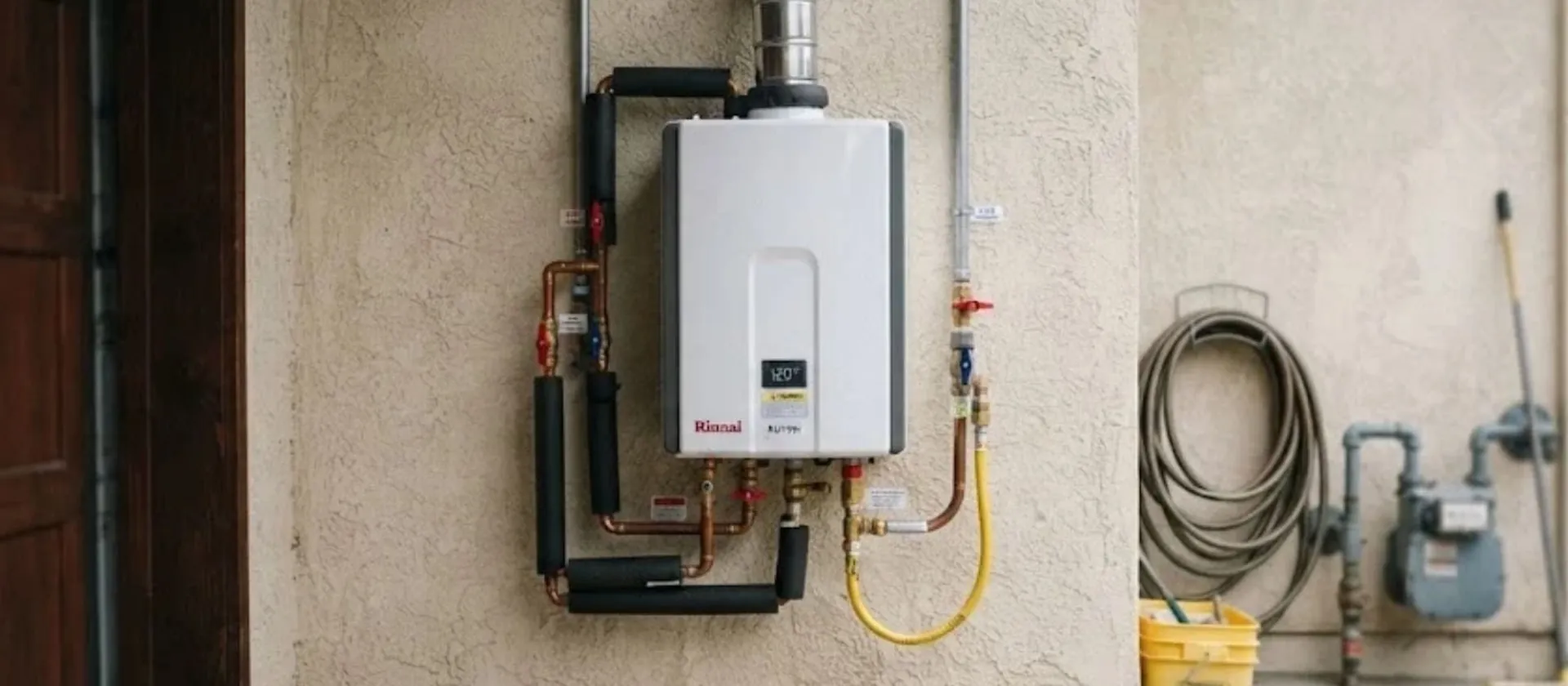
Tankless water heaters heat water only when you open a tap. That one fact explains nearly every advantage and disadvantage. There is no tank to keep hot, so you save standby energy. There is also no stored reserve, so the heater has to deliver the heat on demand.
For a Saratoga household the right choice depends on your gas supply, your water, your floor space and how many people shower at once. Below is a plain comparison.
Tankless strengths and limits side by side
Where tankless wins
- No standby heat loss from a hot tank.
- Takes less floor and wall space.
- Hot water does not run out during a long shower.
- Units often last longer than tanks with regular service.
Where tankless struggles
- Higher cost to buy and to install.
- May need a bigger gas line and new venting.
- Needs regular descaling in harder water.
- Several fixtures at once can exceed its flow rating.
Energy and operating cost
A tank keeps dozens of gallons hot around the clock. A tankless unit heats only what you use. In a household with steady, moderate use, that can lower energy use. In a household that uses a lot of hot water at once, the gains shrink, because a larger unit works harder.
Efficiency ratings help you compare units, but the savings depend on your habits. Ask for the numbers your own household uses, not an average. We discuss this honestly on a site visit because a tankless unit that costs more to buy and install may take years to repay the difference.
Installation changes that raise the cost
| Change | Why it is needed |
|---|---|
| Larger gas line | The unit draws more gas than most tanks. |
| New vent run | Different venting from a tank, often through a wall. |
| Condensate drain | Condensing models produce acidic water that must drain safely. |
| Electrical outlet | Even gas units need power for controls and fans. |
| Service valves | Needed for flushing scale. |
The install page on our site, water heater installation, covers sizing and venting in detail. If your current tank is failing, water heater replacement explains the fast route.
Comfort, space and everyday living
Most owners notice two things after switching. The first is that a long shower or a full tub no longer drains the tank. The second is a short wait at the tap, because the unit needs a few seconds to fire and the pipes still hold cool water. A small recirculation pump can shorten the wait, though it adds energy use and cost.
Space is the other gain. A tankless unit hangs on a wall and frees a garage corner or a closet. In a tight foothill house with a small utility closet, that can change how the room is used. In a large garage the benefit matters less.
Reliability and service
Tankless heaters have more electronics than tanks, so error codes are common calls. Most are scale, a dirty inlet screen or a vent problem, and a service visit clears them. Tanks fail less subtly. They leak. A leaking tank can flood a closet, while a failing tankless unit usually stops heating.
Parts also differ. Tank parts are standard and easy to find. Tankless parts depend on the brand and model, so it is wise to choose a make with local parts support and a documented service procedure.
Hard water and tankless heaters in Saratoga
San Jose Water Company supplies most Saratoga homes. Its water quality report lists hardness by source, and groundwater reads roughly three times harder than Valley Water imported surface supply. The proportion at your tap depends on your street.
Practical meaning: scale reduces heat exchanger efficiency, and many manufacturers require yearly flushing for the warranty. If your water is on the harder end, add the flush to your budget or consider a water softener. A tank also scales, but its larger, simpler parts tolerate it better.
PG&E supplies natural gas in this area. Tankless units often need more gas capacity, so ask the utility and your plumber whether your meter and line can support the unit.
Sources: San Jose Water Company annual water quality report, PG&E gas safety guidance.Who should choose tankless, and who should not
Tankless suits households that want to reclaim floor space, that have steady use, or that are renovating and already opening walls. It also suits homes with long gaps between uses, like a vacation home.
A tank still makes sense when upfront cost matters most, when the gas line or vent cannot be upgraded or when many fixtures run together every morning. A modern tank, properly strapped and flushed, is a reliable choice. Our tankless service page covers repair and flush if you already own one.
Questions to ask any installer
Ask how they sized the unit, what the vent run will be, whether the gas line needs to be upgraded, what happens to the condensate and how often the unit needs service. Ask whether the price includes the permit and the seismic strapping rules that apply to water heaters in California.
You can also compare notes with our neighbors across the hill. Our Los Gatos page describes how the same questions come up there.
Plumbing problem right now?
Call the 24/7 line and a dispatcher will plan the next step with you.
Questions Saratoga Homeowners Ask
It depends on your household. Savings come from no standby loss, but the unit and install cost more. We show both sides on a visit.
Many manufacturers rate their units for around 20 years with regular service. Hard water and skipped flushing shorten that.
Test your tap. If it is hard, softening or yearly flushing protects the exchanger.
Only if it is sized for the combined flow at your temperature rise.
Most need electricity for controls, so they shut down in an outage.